The Anatomy of a Dissertation: A Chapter-by-Chapter Blueprint
Many students fail because they view a dissertation as five separate essays stapled together. A Distinction student views it as one single argument, sliced into five chapters.

In my previous article, I outlined the "Hidden Curriculum", the rules regarding sample sizes, ethics, and criticality that can often dictate the difference between a Pass and a Distinction.
But knowing the rules is only half the battle. You also need to know how to build the structure.
The most common point of failure I observe in UK Business School student dissertations is the "Silo Effect." Students often treat each chapter as an isolated assignment. They write the Literature Review in June, the Methodology in July, and the Discussion in August, hoping they somehow fit together. They rarely do.
Universities such as Southampton (UG & MSc) and Bristol may use different codes, the ingredients of a distinction’ remains the same. A Distinction-grade dissertation is not five essays; it is one single "Golden Thread" running through five chapters. In academic terms, a Distinction-grade dissertation relies on Constructive Alignment. This means your Research Objectives (Chapter 1) must dictate your Conceptual Framework (Chapter 2), which in turn dictates your Methodology (Chapter 3). If one chapter shifts, they all must shift.
Here is the anatomical breakdown of how those chapters fit together, and what needs to happen in each one.
Chapter 1: The Introduction (The Problematisation / The Sales Pitch)
Typical Weighting: ~10% (Often holistic) The Function Academically: To establish the "Research Gap." The Function Psychologically: Grab the attention of the person reading and marking your work and spark their interest.
The Job: To sell the "Gap." A common misconception is that the Introduction is merely a summary. In reality, the Introduction is a sales pitch for the necessity of the research. You are not just stating what you are studying; you are justifying why it needs to be studied now.
Academics often look for "Problematisation"—the process of turning a general topic into a specific research problem.
Like it or not, you are one of many dissertations that pass by the scrutiny of a marker. It would not be uncommon for an academic tutor in a UK Business School to tutor 15 Masters students alongside a good number of Undergraduate students. With the necessary 'blind' Double marking in place this means tutors are marking 30 postgraduate dissertations in a finite time frame. You are not only researching an academic area you are competing for the attention of the marker.

The Anatomy:
- The Hook (Context): Establish the broad context. (e.g., "Generative AI is rapidly changing search behaviours...")
- The Tension (The Problem): Introduce the conflict or the unknown. ("...However, current literature focuses largely on technical accuracy, neglecting the psychological aspect of user trust.")
- The Deficit (The Gap): explicitly state what is missing. ("Consequently, there is little research applying Source Credibility Theory to AI-generated responses.")
- The Resolution (Objectives): How your study fills that gap.
- The Roadmap: Your Objectives and Structure. See https://www.1541.co.uk/dissertation-structure/
The Distinction Difference: Don’t just state the topic. State the tension. If there is no conflict or unknown variable, there is no need for the dissertation. ALL the while maintain a grounding in the evidence you use the clarity of your writing. Everything you say needs to be justified and evidenced with credible references.
The "Sense" Check: Look at your Research Objectives at the end of this chapter.
- Pass Grade: "To find out what people think about AI." (Descriptive).
- Distinction Grade: "To measure the impact of AI source attribution on perceived consumer trust." (Analytical).
Chapter 2: The Literature Review (The Dinner Party)
Typical Weighting: ~20–25% The Function Academically: To demonstrate "Critical Synthesis." You are not listing what you read; you are building the theoretical foundation for your specific study. The Function Psychologically: To prove you are an expert, not a tourist. The marker wants to see that you understand the nuance of the field well enough to critique it, not just repeat it.
The Job: The "Dinner Party" Protocol The number one reason for a low mark in this chapter is the "Shopping List" approach:
”Mayer (1995) said X. Davis (1989) said Y. McKnight (2002) said Z."
This is descriptive. It is boring. And in a pile of 30 dissertations, it puts the marker to sleep.
To achieve a Distinction, you must treat this chapter like a Dinner Party.

Imagine you have invited the three giants of the field—Mayer, Davis, and McKnight to a table. They wouldn't just take turns speaking; they would argue, agree, complicate, and contradict one another. You are the Host. You facilitate the conversation between these experts to highlight the specific gap your research will fill.
The Anatomy:
- The Broad Context (The Funnel): Start wide. If you are studying "Trust in AI," briefly establish the history of Technology Acceptance (TAM) before you drill down into trust.
- The Specific Variables (The Meat): Drill down. Dedicate sections to your specific Independent and Dependent variables. This is where you critique the current state of play.
- The Synthesis (The Twist):
"While Mayer et al. (1995) argue that trust requires 'Benevolence' (a genuine desire to do good), this creates a paradox for Artificial Intelligence. As AI lacks consciousness, it technically cannot possess benevolence[1]. Davis (1989) offers a counter-perspective, arguing that in digital contexts, 'Utility' (usefulness) overrides the need for emotional connection[2]. McKnight (2002) bridges this gap by suggesting that users replace 'Benevolence' with 'Structural Assurance'—trusting the platform (e.g., Google) rather than the algorithm itself.”[3]
(See what happened there? You didn't misquote Mayer. You applied his "Human" rule to a "Machine" context to find a gap.)
The Conceptual Framework (The Output): This is the climax of the chapter. You must present a visual model or a set of hypotheses that frames your view of the world.
The Distinction Difference: A Pass-grade submission ends the chapter by summarising what has been read. A Distinction-grade ends the chapter with a Hypothesis or a Conceptual Model. This visually proves to the marker: "I haven't just read the books; I have synthesised them into a specific lens through which I will view my data."
The "Sense" Check: Look at the first sentence of your paragraphs. Pass Grade: "Mayer (1995) states that..." (Subject is the Author). Distinction Grade: "Trust is a multidimensional construct..." (Subject is the Concept).
Chapter 3: The Methodology (The Recipe)
Typical Weighting: ~15–20% The Function Academically: To ensure Replicability and Validity. The Function Psychologically: To reassure the marker that your findings are not just your opinion.
The Job: The "10-Year" Recipe This is the most dangerous chapter. It is where you either pass or fail based on technical execution. Think of this chapter as a Recipe.

The ultimate test of a methodology is the "10-Year Rule."
If I pick up your dissertation in 10 years' time, can I re-run this exact study without calling you to ask a question?
If the answer is "No" because you didn't say which day you collected data, or exactly what questions you asked, you fail the replicability test. In academia, a result that cannot be replicated is not a result—it is an anecdote.

The Anatomy: Peeling the Onion To get the marks, you must structure this chapter by "peeling the Research Onion" (Saunders et al., 2023) from the outside in, while ensuring you answer the practical "5 WH" of data collection.
1. Philosophy (The Lens) Don't skip this, even if it feels abstract. Are you a Positivist? (You believe there is one objective truth, measurable by data—typical for surveys). Or an Interpretivist? (You believe truth is subjective and personal—typical for interviews)4. Alignment Check: You cannot be a Positivist and then ask vague, feeling-based questions.
2. Strategy (The Tool) Survey? Experiment? Case Study? Justify why you chose one and rejected the others. Distinction Phrasing: "While interviews would provide depth, a quantitative survey was selected to ensure the statistical power required to test the conceptual framework."
3. Operationalisation (The 5 Ws) Most students spend 2,000 words writing about "Philosophy" but forget to tell me what they actually did. To pass the "10-Year Test," you must answer the 5 Ws:
- WHO did you ask? (And who did you exclude?)
- WHERE did you find them? (LinkedIn? The Mall? A specific Reddit forum?)
- WHEN did you ask them? (Data collection dates matter—consumer sentiment changes).
- HOW did you ask them? (SurveyMonkey? Face-to-face?)
- WHY did you do it that way? (Justification).
Stop. You are a Master’s student, not a psychometrician. If you invent your own questions, you are essentially "building your own ruler." Nobody knows if your ruler is accurate. The Fix: Use Validated Scales. If you want to measure "Trust," do not make up a question. Go to Google Scholar, find Mayer et al. (1995), and use their exact questions (scale items). Why? Because they have already proven mathematically (Cronbach’s Alpha > 0.7) that these questions work. Distinction Phrasing: "Trust was measured using the 5-item scale adapted from Mayer et al. (1995) to ensure construct validity."
A pass student describes what they did, "I sent out a survey to 100 people." A distinction student defends why they didn't do the alternative, "A non-probability convenience sampling strategy was adopted due to time constraints, acknowledging the limitation of generalisability compared to random sampling."
Why this fails:
- Recall Bias: People lie to themselves. They don't remember how they felt; they remember how they think they should have felt.
- No Control: One person is imagining a helpful chatbot; another is imagining a broken one. You are measuring two different things.
The Fix: The "Simulated Stimuli" Experiment Don't ask them to imagine. Show them. Instead of asking about the past, create a "Scenario" right now.
A pass student asks friends to "remember a time." A distinction Student, creates two screenshots (e.g., a Google Search vs. a ChatGPT answer) and randomly shows one to each participant.
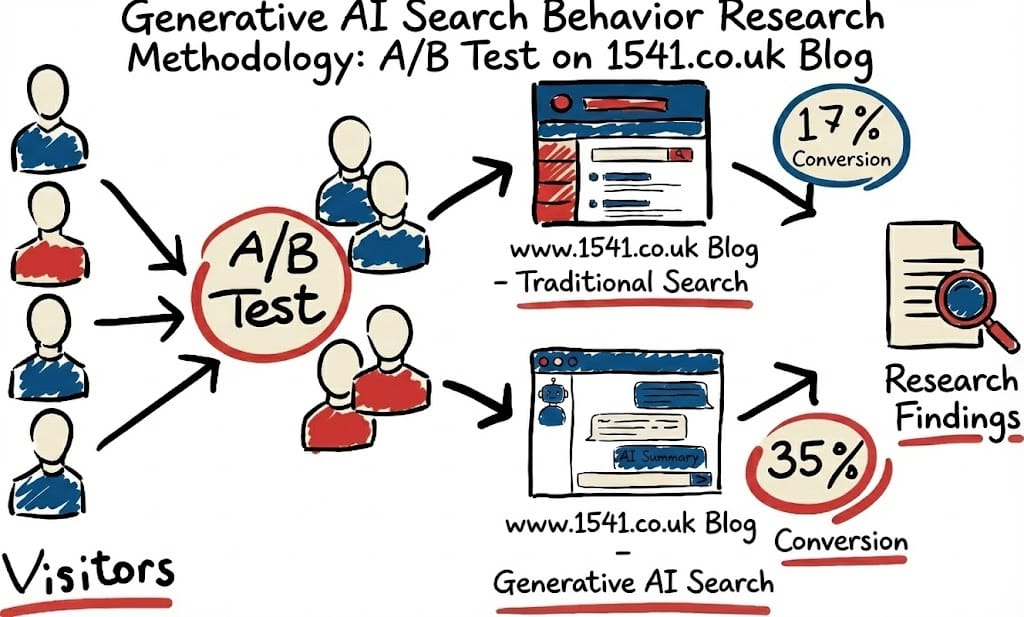
By using an experiment and Simulated Stimuli, you control the variable. You aren't measuring their bad memory; you are measuring their immediate reaction. It is rigorous, it is scientific, and paradoxically, it is actually easier to write up.
The "Sense" Check Look at your Research Objectives (Chapter 1) and your Method (Chapter 3).
- Objective: "To measure the impact..." → Method: Must be Quantitative (Survey/Experiment).
- Objective: "To explore the feelings..." → Method: Must be Qualitative (Interviews).
Chapter 4: The Findings (The Evidence)
Typical Weighting: ~15% The Function: To report the facts, devoid of opinion. The Job: "The Courtroom Clerk"
Think of your dissertation as a court case.
- Chapter 1-3: You (the Lawyer) set up the argument.
- Chapter 5: You (the Lawyer) make your closing speech.
- Chapter 4: You are the Court Clerk. You simply read the evidence into the record.

If you write "This suggests that..." or "Surprisingly..." — STOP. You are drifting into Chapter 5. You are not allowed to be surprised yet. You are only allowed to count.
The Anatomy: Three Steps to Rigour
1. Data Cleaning & Demographics (The Foundation)
Before you show me the result, prove you have the right participants. Data Cleaning: Briefly mention if you deleted bad responses (e.g., "3 participants were removed for completing the survey in under 30 seconds"). This shows high-level quality control. The Demographics: Don't just paste a pie chart of "Gender." Tell me if the sample matches your plan. Distinction Phrasing: "The final sample (n=152) was predominantly Gen Z (65%), consistent with the target demographic identified in Chapter 3."
2. Reliability & Validity (The Quality Control)
This is where you prove your "Ruler" (Methodology) wasn't broken. The "Bible" Recommendation: If you are unsure how to run these tests, do not guess. Get a copy of Julie Pallant’s SPSS Survival Manual. It is the industry standard for a reason. Follow her step-by-step guide to generate your Cronbach’s Alpha. The Rule: Any Alpha score over 0.7 is acceptable. Present this in a clean APA-style table.
3. Hypothesis Testing (The Main Event)
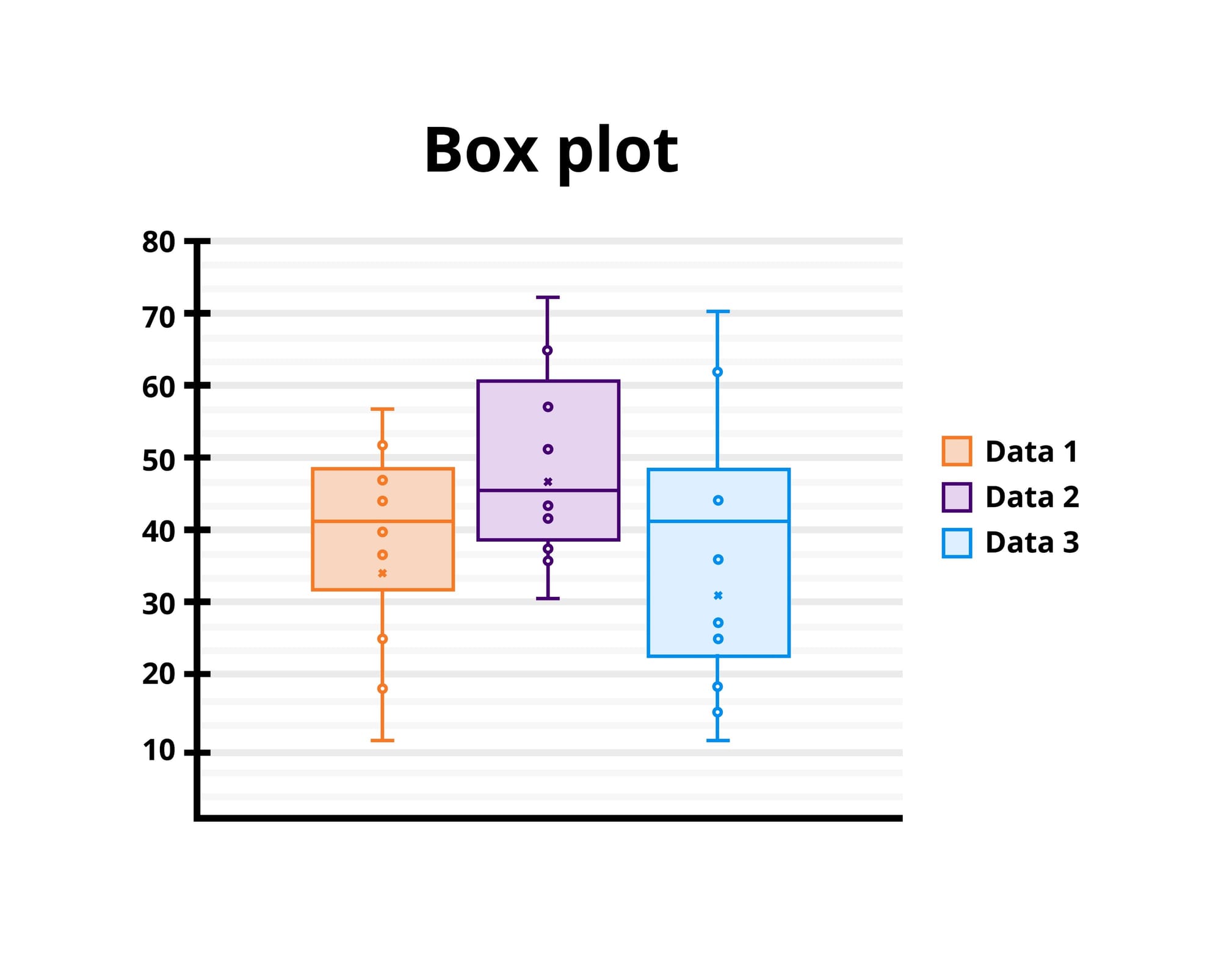
This is what we came for. Structure this section Hypothesis by Hypothesis. Restate the Hypothesis: "H1: Consumers will trust AI less than Google." State the Test: "An Independent Samples T-Test was conducted." The Visual: Insert a clear Bar Chart or Box Plot to show the difference visually. 4. The Stat: "There was a significant difference in trust scores (t=3.45, p < .001)." 5. The Verdict: "Therefore, H1 is Accepted."
A Note on AI and Data Analysis (The "Calculator" Rule)
There is a growing debate about using AI (like ChatGPT Data Analyst) to run your statistics. Many universities have been slow to catch up on this, but here is the pragmatic "Distinction" view. AI is a Calculator, not a Ghostwriter. Using AI to clean your Excel sheet or run a T-Test is like using a calculator for long division. It is efficient, and it stops you from making basic math errors. The skill of a Master's student is not "Mental Arithmetic" (coding R from scratch); it is Interpretation.
The Strategy: Use AI to run the code, but use Pallant’s Manual to verify you understand why that P-Value matters. The Ethics: Be transparent. If you used Python in ChatGPT to visualise your data, state it in your methodology. Honesty is academic rigour; hiding it is malpractice.
Loving the Negative Result. A huge anxiety for students is: "My P-Value is greater than 0.05. Nothing happened! I have failed". Incorrect. In science, finding no difference is just as important as finding a difference. If you prove that "AI does not affect Brand Loyalty," that is a massive finding. It tells Marketing Directors they don't need to panic about AI.
A pass student fudges the data to make it look significant. (This is academic fraud). A distinction student reports the non-significant result with confidence. "Contrary to expectations, the data revealed no significant link (p=.24). This implies that current theories regarding AI hesitation may be overstated."
The "Vertical Alignment" Check
Before moving to Chapter 5, check the 'Vertical Alignment' of your work by looking at your Hypothesis List from Chapter 2. Have you reported a 'Verdict' (Accepted/Rejected) for every single one? If you forgot to test and of the hypotheses, go back and do it now.
Next Step: Now that the facts are on the table, we move to Chapter 5: The Discussion, where you finally get to say "This suggests that..."
Chapter 5: The Discussion (The "So What?")
Typical Weighting: ~20–25% (The High Value Chapter) The Function Academically: To connect the Evidence (Ch4) back to the Theory (Ch2) to answer the Objectives (Ch1). The Function Psychologically: To show the marker you understand the implication of what you found.
The Job: Closing the Loop. If Chapter 4 was the "Court Clerk" reading the evidence, Chapter 5 is the Lawyer’s Closing Argument. You must explain what the evidence means.
A dissertation is not a straight line; it is a circle or loop. You started with a question (Chapter 1). You are now finishing with the answer.
The Anatomy: The "Synthesis" Formula To get a Distinction, every paragraph in your Discussion should follow this simple formula: [Your Finding] + [Previous Literature] = [New Insight]
1. The Synthesis (Bringing the Guests Back). Do not just list your findings. Compare them to the experts you introduced in Chapter 2.
- Distinction Phrasing: "The data revealed a low trust score for AI (Mean=2.1). This finding contradicts Davis (1989), who argued that high utility leads to adoption, but supports Mayer (1995), who posited that benevolence is a prerequisite for trust. This suggests that for UK consumers, 'smart' is not enough; the AI must also be perceived as 'kind'."
2. The "Uninvited Guest" Rule. Never introduce a new author in the Discussion. If you suddenly start quoting Smith (2024) to explain a result, but Smith wasn't at your "Dinner Party" in Chapter 2, you have broken the rules. You should only discuss the theories you already set up.
3. Managerial Implications (The "Commercial" Value) you are in a Business School, not a Philosophy Department. At this stage, your marker is channeling Jerry Maguire:"Show Me The Money!"
You must answer: How does this research help a company make profit or save money? A pass student may say that "Marketing managers should be aware of this." (Vague). A distinction student elaborates, "For Travel Brands, this implies that replacing human support agents with AI will result in a measurable drop in conversion for high-ticket items. Therefore, a 'Hybrid Model' is recommended for purchases over £500."
4. Limitations (The "Humility" Check) Admitting you were wrong is a sign of intelligence. Did you have too many Gen Z respondents? Did you use a convenience sample? Say it here. It protects you. "Acknowledging the limitations of non-probability sampling..."
Before you submit check the vertical alignment once again, the "Golden Thread" Test. Open your document.
- Read Objective 1 (Chapter 1).
- Read the First Paragraph of your Discussion (Chapter 5).
Do they match? If Objective 1 was "To measure the impact of Price," but your Discussion starts with "Participants felt happy...", your thread is broken. Chapter 5 must explicitly answer the questions posed in Chapter 1.
Conclusion: The "Mic Drop". Finally, write a short Conclusion (often part of Ch 5 or a separate Ch 6 depending on the university). This should be one page. No new references. No new data. Just the answer.
"This dissertation set out to investigate X. It found Y. The implication is Z."
Final Note for the Series: You now have the Rules (The Hidden Curriculum) and the Structure (The Anatomy). But a structure is useless without a Topic.
In the next article, we will apply this exact blueprint to Topic #1: Generative Engine Optimization (GEO), giving you the specific Objectives, Literature, and a Methodology to consider.
Footnotes
[^1]: Mayer, R.C., & Davis, J.H. (1995). An Integrative Model Of Organizational Trust. Academy of Management Review, 20, 709-734.↩
Mayer et al. (1995) never mentioned AI. AI did not exist at this time. They argued that Trust requires Benevolence (a desire to do good). YOU are the one who steps in and says: "If Mayer is right, and trust requires a soul, then AI can never be trusted." This is the essence of "Synthesis." You are applying an old rule to a new player to expose a conflict.
[^2]: Davis, F.D. (1989). Perceived Usefulness, Perceived Ease of Use, and User Acceptance of Information Technology. MIS Q., 13, 319-340.↩
[^3]: McKnight, D.H., Choudhury, V., & Kacmar, C.J. (2002). The impact of initial consumer trust on intentions to transact with a web site: a trust building model. J. Strateg. Inf. Syst., 11, 297-323.↩
[^4]: A Note on Philosophy (Pragmatism): If you find the binary debate between Positivism and Interpretivism frustrating, you are likely a Pragmatist. Following the logic of John Dewey and William James, Pragmatism argues that the "correct" method is simply the one that best answers the research question ("The Cash Value of Truth"). The Safe Bet:Cite Saunders et al. (2023 page 145) to justify this stance to your marker. The Real Work: If you actually want to understand whyyou think this way, read William James’s Pragmatism (1907). It is surprisingly readable, short, and destroys the "Ivory Tower" nonsense better than any modern textbook.↩
Was this helpful?
Join our newsletter
We share our insights on Marketing, Education, and anything else that takes our fancy. No spam. Unsubscribe anytime.
No spam. Unsubscribe anytime.


