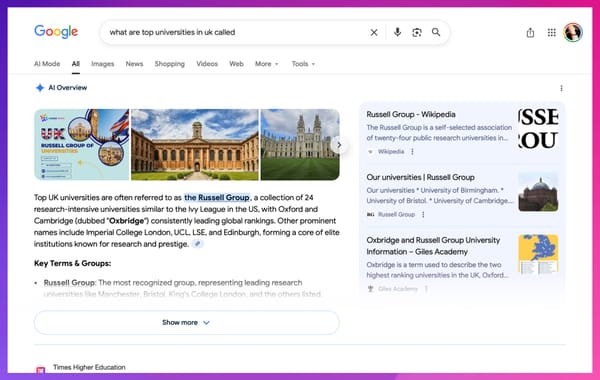
The End of the Honeymoon: OpenAI Just Dropped the Ad Bomb
The "Clean Web" is dead. As OpenAI pivots to ads, we analyse the shift through Doctorow’s "Enshittification" theory and the rise of Paid Answer Optimisation. Plus: The Friday Briefing on Balenciaga’s ugly luxury, the TikTok deal, and Apple’s Gemini pivot.
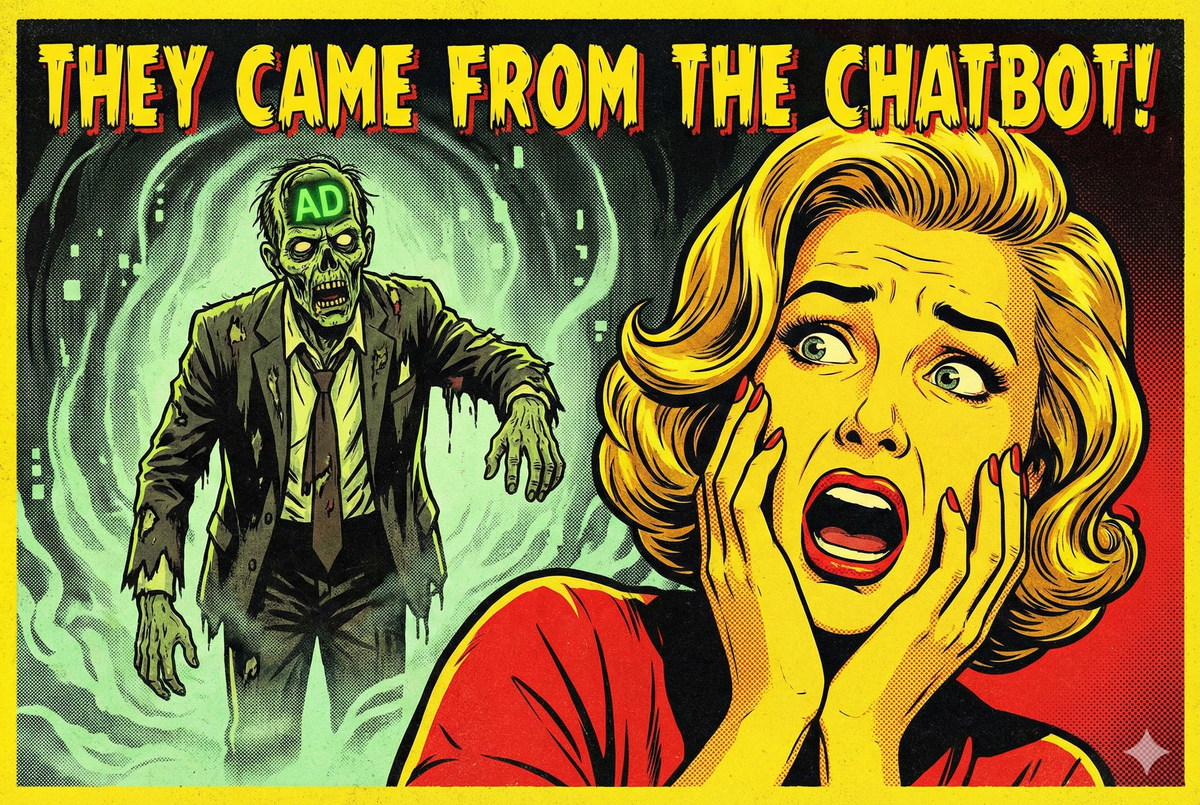
We all knew it would happen eventually. We just hoped it wouldn't be this soon.
For three years, we have enjoyed the "Clean Web", an interface with no banners, no pop-ups, and no clutter. Just an empty white box and an answer. That era is now officially over (for free users at least).
On January 20, OpenAI confirmed the pivot. In a blog post detailing their new ad strategy, the company announced it will begin testing ads in the US for both free users and subscribers to its new low-cost "ChatGPT Go" ($8/month) tier. While they frame this as a way to "support broad access to AI," the financial reality tells a different story.
As CNN Business reports, the pressure to monetise is mounting. Despite having 800 million monthly users, OpenAI has committed to spending a staggering $1.4 trillion on AI infrastructure over the next eight years.
This marks a sharp U-turn for CEO Sam Altman, who, as CNN reminds us, previously stated he "hated" ads and found the idea of merging them with AI "uniquely unsettling." But as Forbes notes, even with annualiased revenue hitting $20 billion, the costs of staying ahead of Google and DeepSeek are forcing the company to abandon its "clean" ethos.
The honeymoon is over.
As a marketing student, you need to look past the user outrage and see the economic engine at work. This isn't just "corporate greed"; it is a textbook case of the digital lifecycle.
The Theory: "Enshittification"
Coined by Cory Doctorow back in 2025, it is a really useful framework for understanding platform economics in 2026. You can see more on Amazon here.
Doctorow argues that every platform follows a predictable, three-stage death spiral:
- Stage 1: Be Good to Users. You run at a loss to acquire millions of users (The "Free ChatGPT" era).
- Stage 2: Be Good to Business. Once users are locked in, you degrade their experience to sell access to advertisers (The "Sponsored Answer" era—we are here).
- Stage 3: Be Good to Shareholders. Finally, you claw back value from the advertisers to hit quarterly targets, leaving everyone miserable.
The Marketing Implication: "Paid Answer Optimisation" (PAO)
Last week I provided an outline around writing a dissertation on GEO (Generative Engine Optimisation), typically, as I write, things change once more. This news just added a new variable to the conceptual framework.
Until last week, we thought the battle for AI visibility was organic (SEO). Now, it is becoming paid (PPC). I suppose we shouldn't be surprised. It is following a very similar historical path. If you cant own or earn the space, you can always pay for it.
- Old World (Google): You pay to be the top link.
- New World (ChatGPT): You pay to be the source of the answer. This bit I find really quite frightening. We have started to trust Large Language Models (LLM) even with their 'LSD' tendencies, but I would rather have a that than Nike, or Coke or another paying for Product Placement in an answer.
The Prediction:
By Q4 2026, we won't just see "Sponsored Links" at the bottom of a chat. We will see brands paying to influence the tone of the answer.
User: "What is the best running shoe?" AI: "While Nike offers great cushion, Adidas (Sponsor) has just released the Ultraboost 6, which studies show reduces fatigue by 15%..."
The Lesson: Enjoy the clean interface while you can.
📚 The Friday Fun Reading List: 5 Stories You Missed
If you are looking for inspiration or just want something slightly different to talk about, here are 5 stories in the marketing press this week.
Balenciaga launched its Year of the Horse collection. The design? A plain grey bag with "Balenciaga Paris" written in what looks like comic sans / messy cursive. I simply dont get it, but I am not sure I meant to. Veblen Goods still applies however, see Conspicuous Consumption. The fact that it looks "bad" signals that the wearer is rich enough not to care about traditional aesthetics.
The "If You Can't Beat Them" Pivot (BBC x YouTube) On Jan 21, the BBC confirmed a landmark deal to produce original shows for YouTube. Why? Because data shows YouTube viewership (51.9m) has finally overtaken the BBC (50.9m). ITV’s Strategy Director warns this is "giving away revenue," but the lesson is clear: Distribution Strategy dictates that you must go where the eyes are, even if you don't own the land.
The "Splinternet" is Official: TikTok Survives On Thursday (Jan 22), TikTok finally closed the deal to escape a US ban. The app is now operated by a new US entity owned 80.1% by Oracle, Silver Lake, and MGX. The marketing implication? Algorithmic Nationalism. The deal requires the US feed to be "retrained" exclusively on US data, separate from ByteDance. The global internet is officially dead; we are now marketing in walled gardens.
The "Kingmaker" Pivot: Apple Chooses Gemini On Jan 12, Apple confirmed a multi-year deal to use Google Gemini as the foundation for the new Siri, sidelining OpenAI. This may explain OpenAI's sudden pivot to ads. They have lost the monopoly on the iPhone home screen, so they must monetize the web interface. In B2B marketing, "First Mover Advantage" (ChatGPT) often loses to "Infrastructure Reliability" (Google).
The "Backdoor" is Open: Microsoft & The FBI Today (Jan 23), Forbes revealed that Microsoft handed over BitLocker encryption keys to the FBI to unlock a suspect's laptop. Unlike Apple’s famous 2016 refusal to unlock an iPhone, Microsoft complied. The marketing lesson? Differentiation. Apple sells "Privacy" as a product; Microsoft sells "Utility." If you store your keys in the cloud, you are renting your privacy, not owning it.
Join our newsletter
We share our insights on Marketing, Education, and anything else that takes our fancy. No spam. Unsubscribe anytime.
No spam. Unsubscribe anytime.