The Locked Chocolate Aisle: How Incentives, Risk, and AI Are Reshaping Retail Behaviour
Chocolate bars in lockboxes sound like a quirky news story. In reality, they reveal how incentives, risk management, and AI‑driven surveillance collide on the supermarket shelf – and why marketers, not just loss‑prevention teams, should care.

The sight of family-sized chocolate bars locked in clear plastic boxes, requiring a staff member with a key for purchase, is absurd. In several UK supermarkets, chocolate is now considered ‘high-risk’ stock, alongside alcohol, razor blades, and meat. One retailer even calls it ‘the new buzzword for organised crime’. Behind this oddity lies a harsh commercial reality: branded confectionery can be worth hundreds of pounds, and a single offender can steal £200-£300 worth of stock in a rucksack, costing stores thousands in a week.
Retailers are responding with reduced shelf exposure, more cameras, and technology-enabled detection, but research suggests these measures are effective in some contexts and weak in others, depending on product type and implementation (Hayes et al., 2019; Sidebottom et al., 2017).
This quirky news story reveals how modern retail works, where incentives, opportunity, and risk management collide on the supermarket shelf. It’s not just about stopping shoplifters; it’s about how everyday marketing decisions make some products crime targets, and how the tools used to protect them, from lockboxes to AI-driven surveillance, are reshaping the customer experience.[bbc.co.uk]
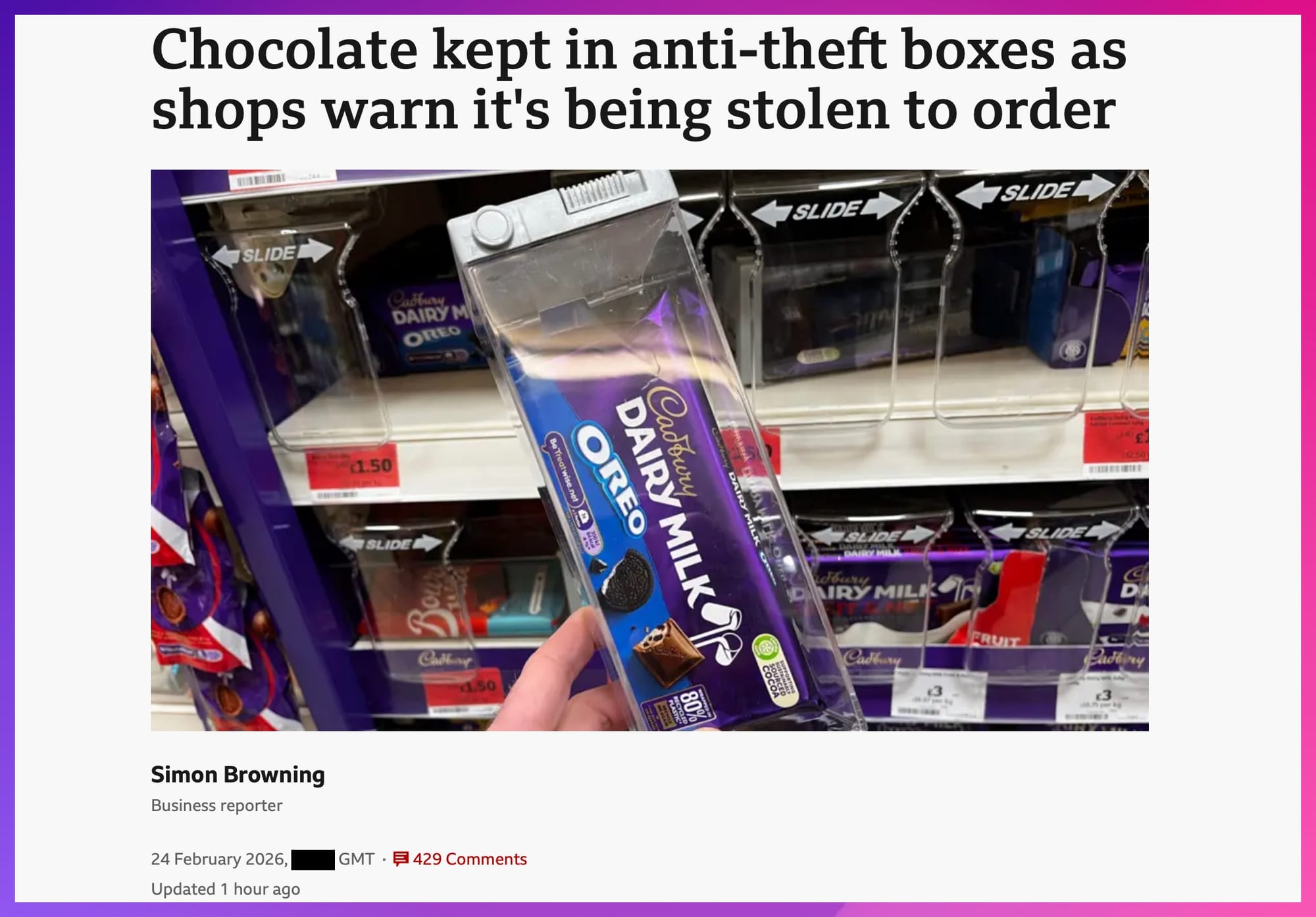
On one level, chocolate is an odd candidate for “high‑risk” status: relatively cheap, ubiquitous, and marketed as an everyday comfort rather than a luxury. But viewed through an opportunity lens, it is almost a perfect target. Routine activity theory holds that everyday crime flourishes when three conditions align: a likely offender, a suitable target, and the absence of a capable guardian (Felson, 1996). In busy supermarkets with stretched staff, self‑checkout areas and long aisles, those conditions are easy to find.